UI/UX Designer
4 weeks
Conducting user interviews
Paper and Digital wireframing
Data gathering and analysis
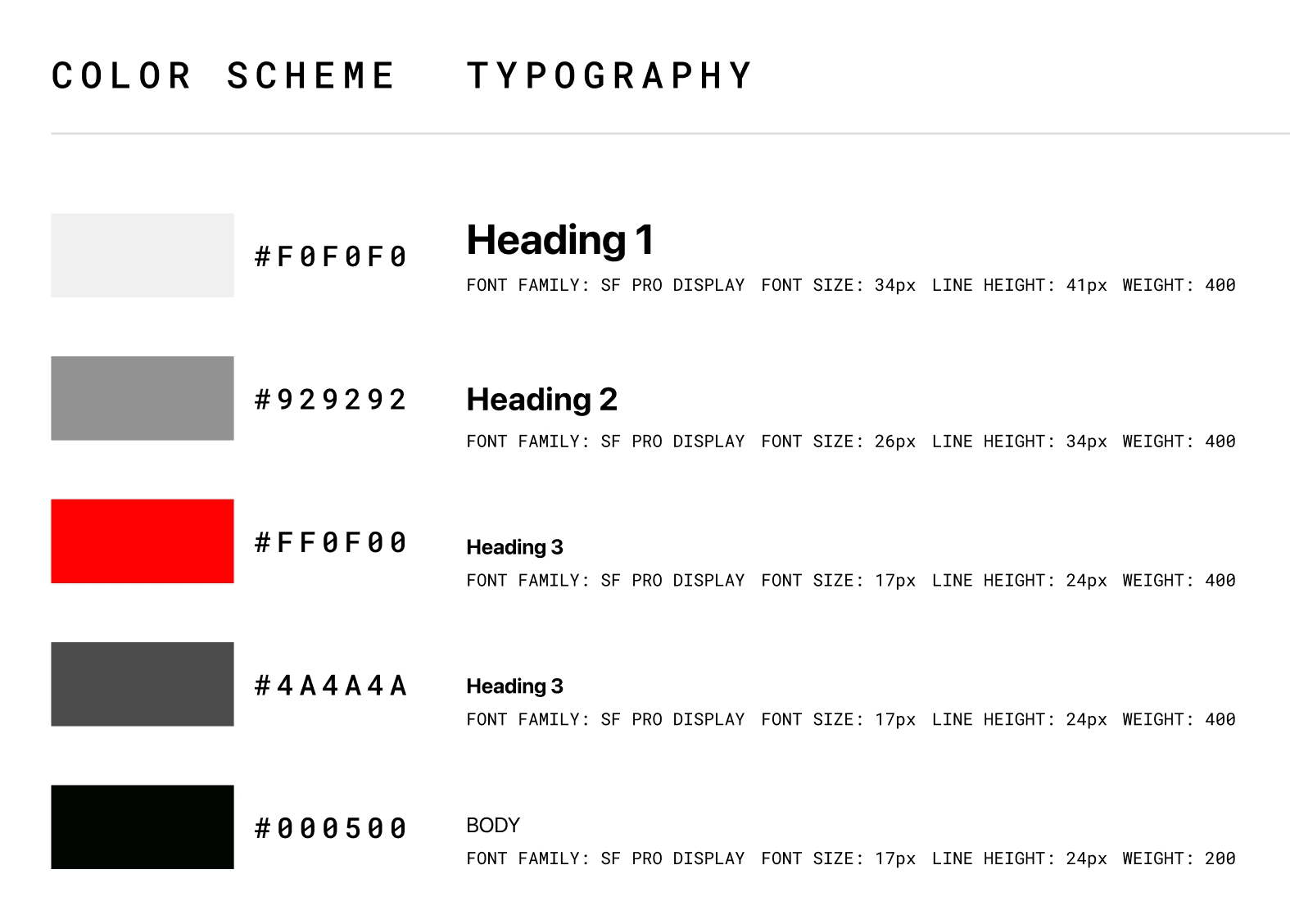
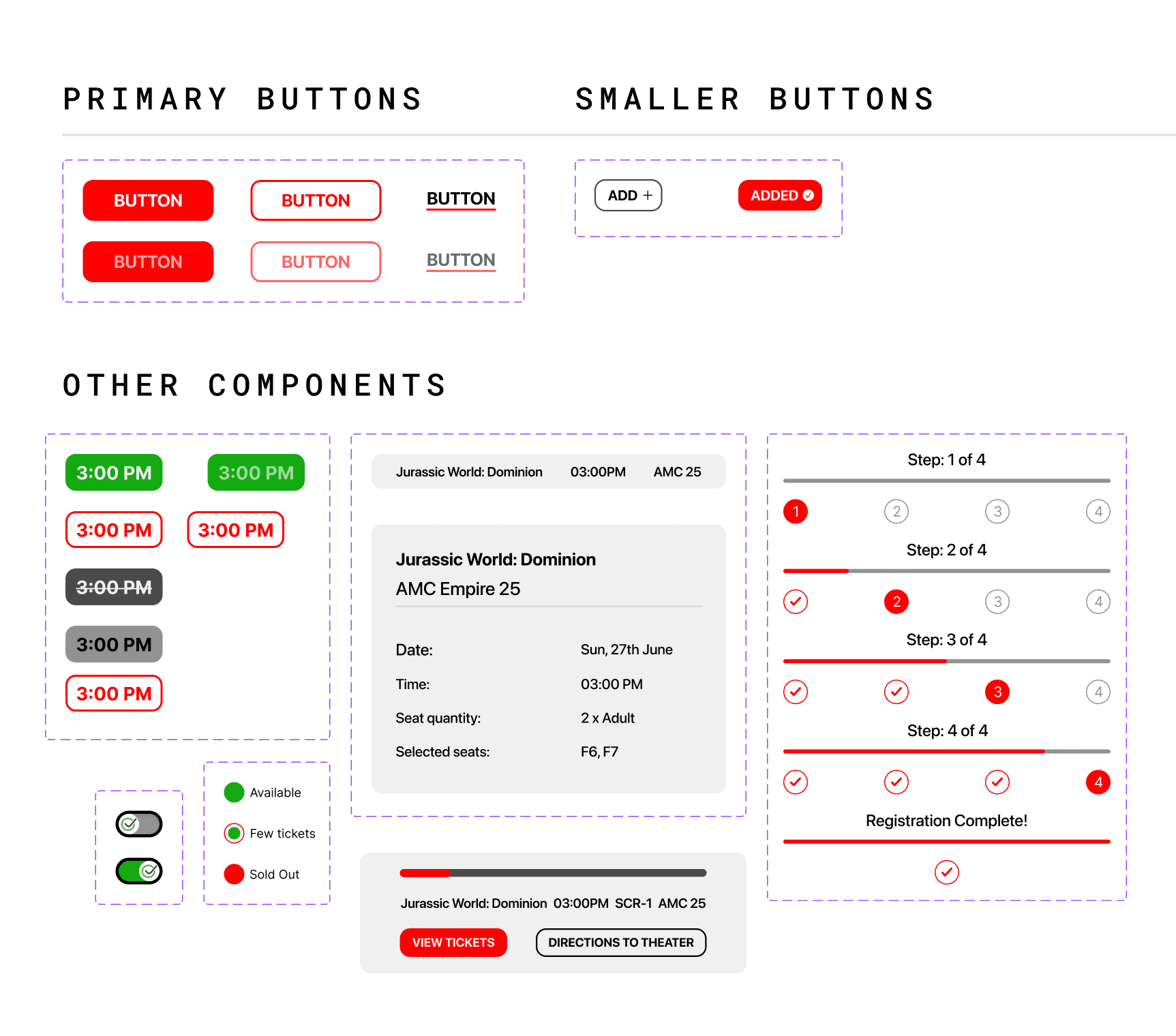
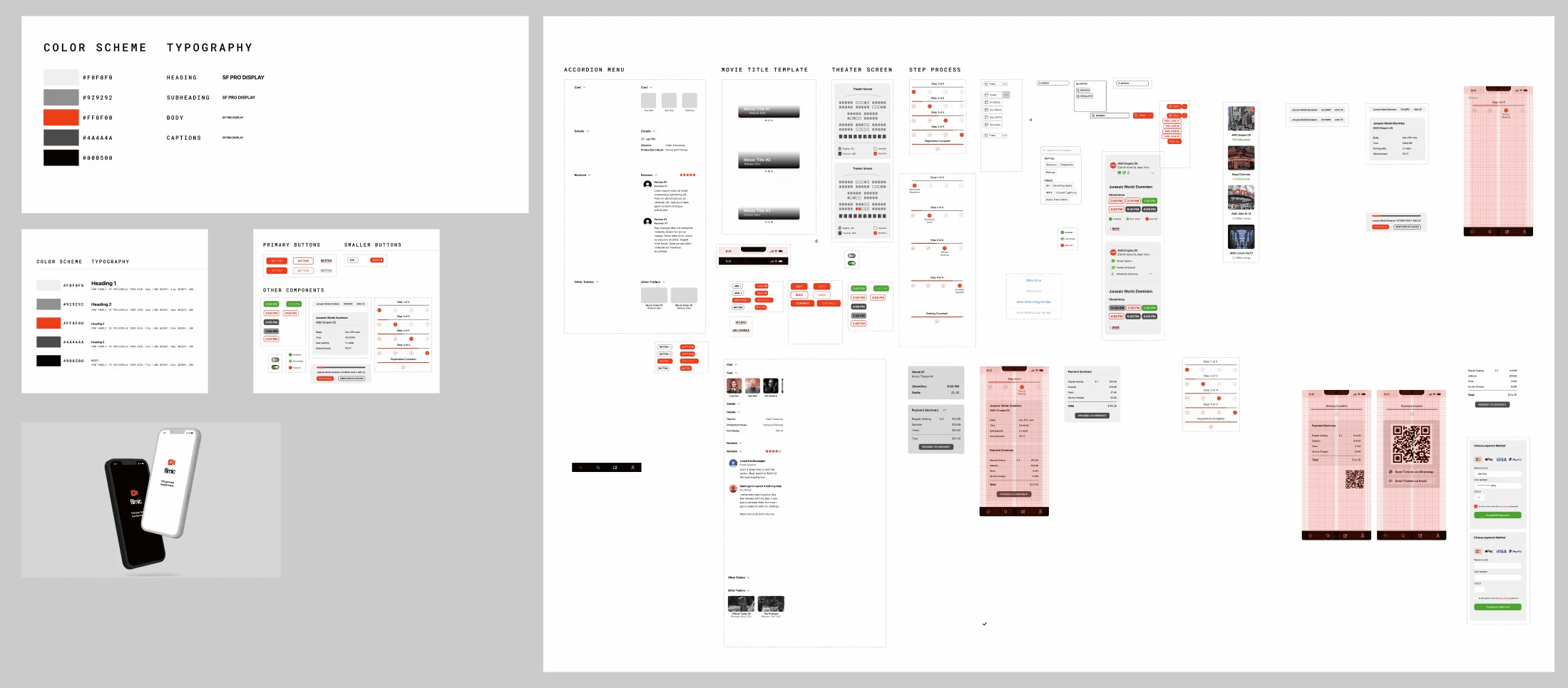
Creating the design system
Figma
Figjam
Adobe creative suite
Project Overview
In today’s world, the amount of distractions that we have are endless. Imagine trying to look for a movie to watch, you click on a trailer and before you know it, you’re 45 minutes into watching cute cat videos. This is a pretty problematic. Enter Filmic.
Filmic is an iOS app that was created for viewing movie trailers and booking tickets, all in one place. It takes you from trailer to theater in record time.
Problem
Users frequently struggle with navigating multiple applications to complete the process of viewing trailers and purchasing tickets.
Approach
Ability to watch movie trailers and book tickets without getting distracted. Ability to find age-appropriate movies for children based on standardized metrics and user reviews.
Product goals
Ability to provide personalized recommendations based on user indicated interests. Unification of the experience of viewing trailers and ticketing in one space, so users don't have to switch between apps.
Outcome & Impact
These were the end metrics calculated after implementing the redefined dashboard.
85%
Task success rate
15%
Error rate
75%
User satisfaction
70%
Conversion rate
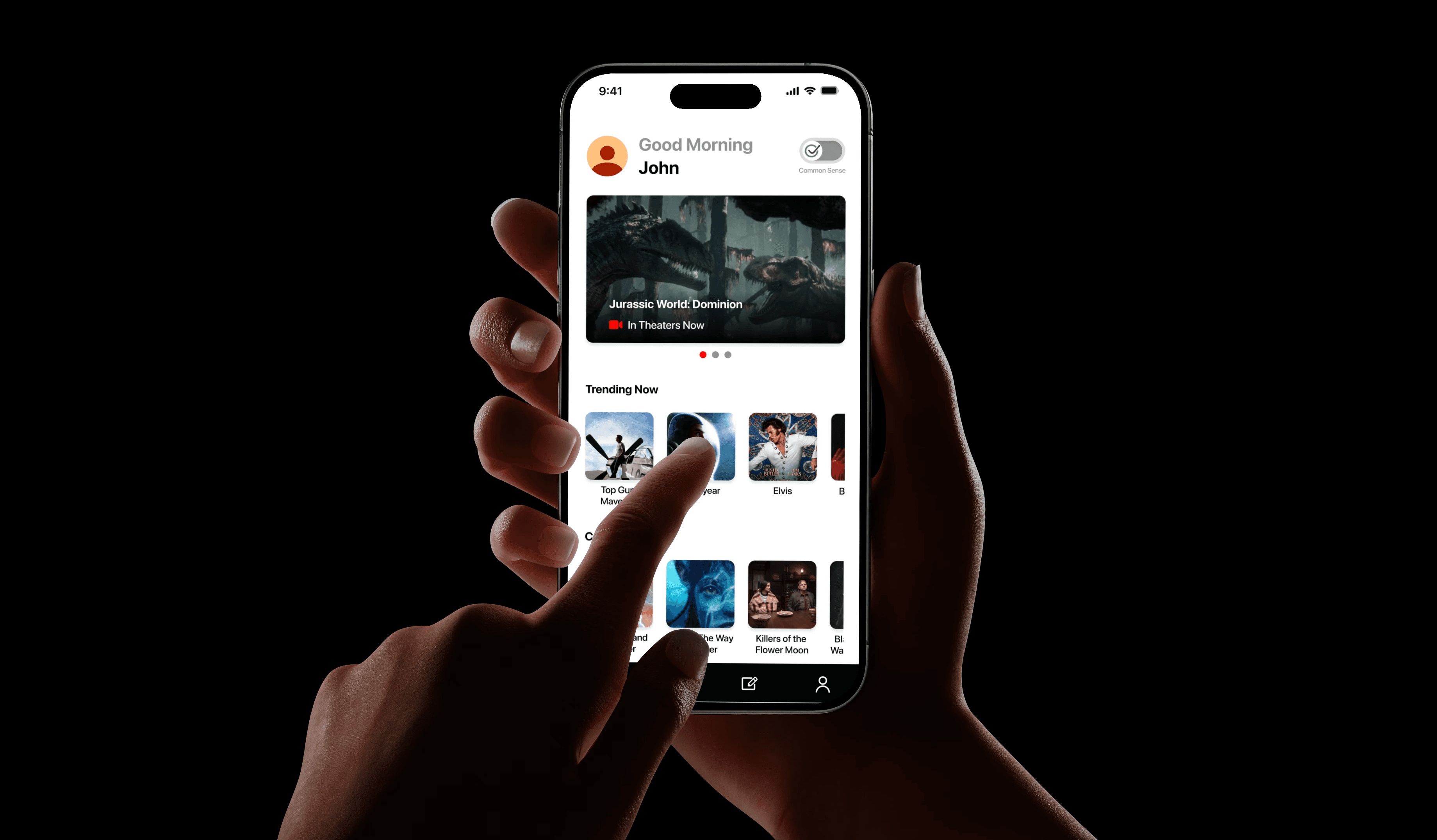
High fidelity prototype
Research
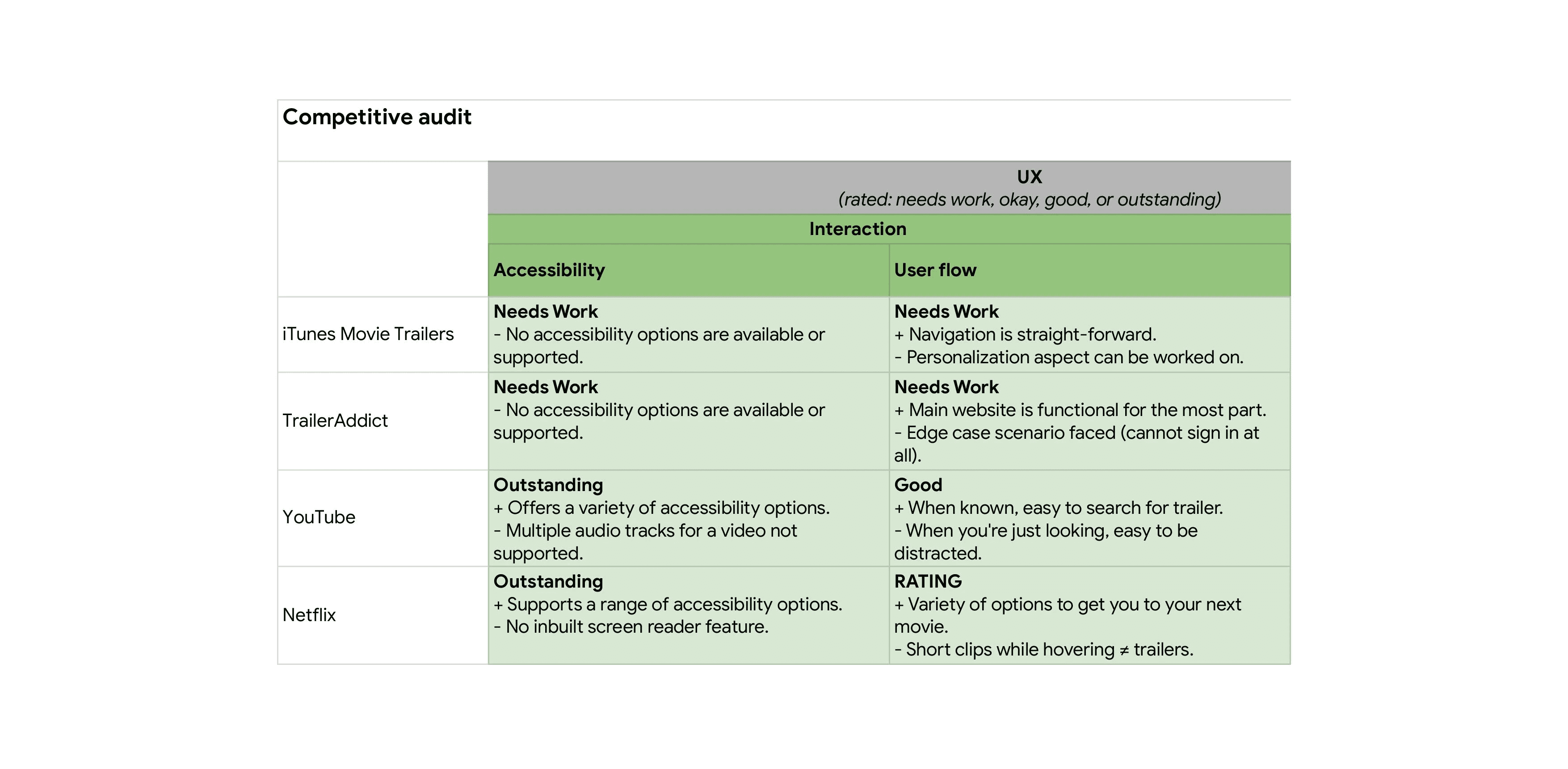
The main research for this project was done through user interviews and competitive audits. Doing these were crucial to understanding what the pain points the users had with existing applications and how they could be improved.
Although this was a great start, it wasn't at a stage where all the designs were completely thought through before implementation. The design + development of the first version of Palatial's dashboard was done in 2 months, which wasn't enough time to create a fully working dashboard that was ready for users.
When we had a working prototype ready (V1), I took the lead to test the current designs with a subset of potential users to understand areas of improvement and what pain points the users were facing.
User research study
I spoke with various participants from different backgrounds to understand their perspective on how they go about viewing trailers and booking their tickets.
Some of the research questions I looked into were as follows:
Does a personalized feed help in finding a desired movie?
Is booking through the same app a feature the users want?
What are the other features that could be missing from this app?
Would looking at user reviews for movies help people in making the right decision?
Does the app require a social media component to be successful or not?
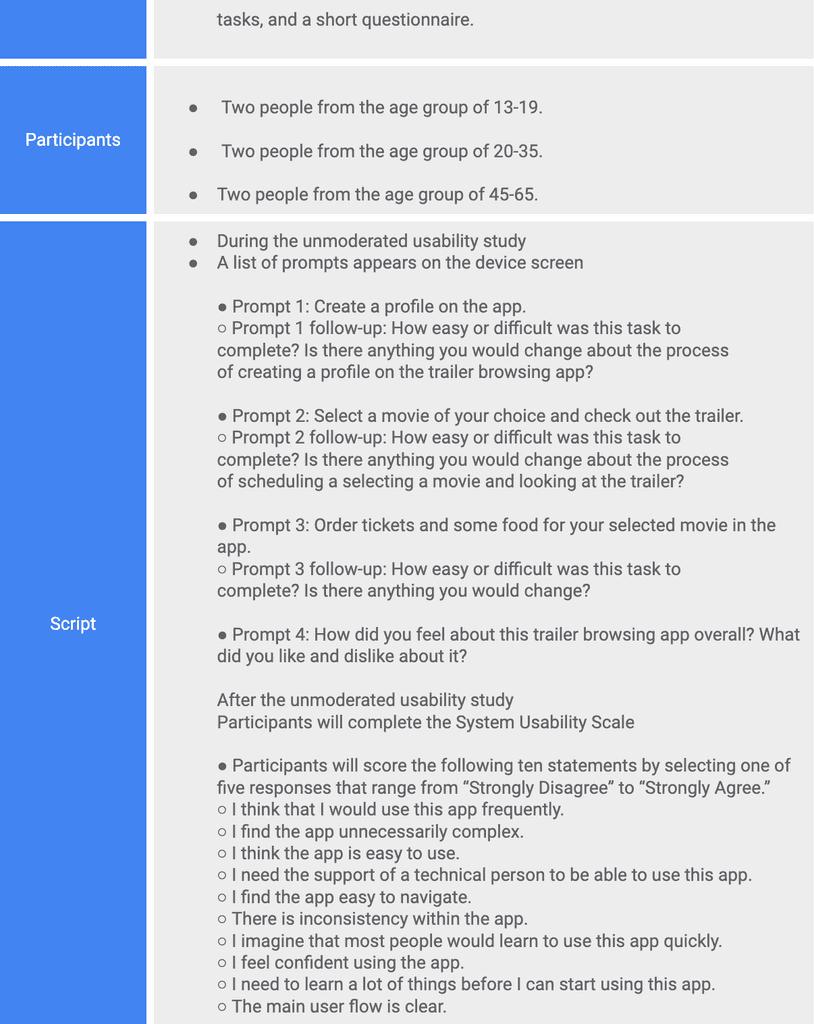
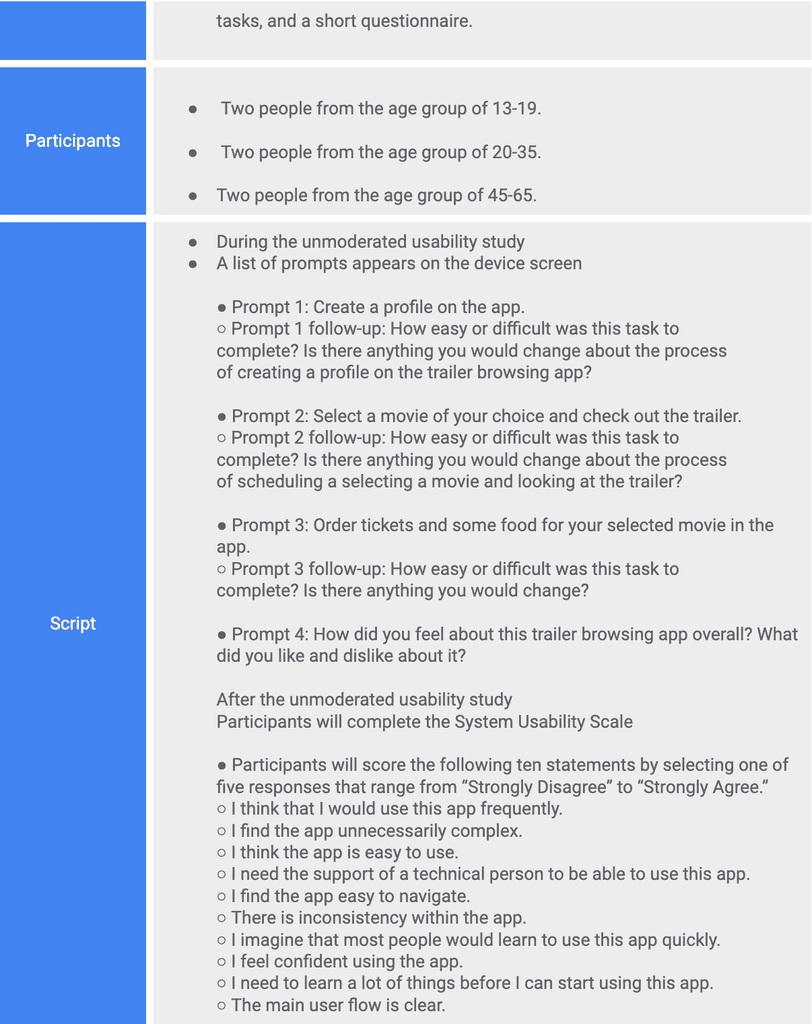
User research notes
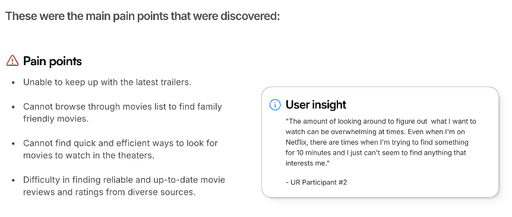
Findings
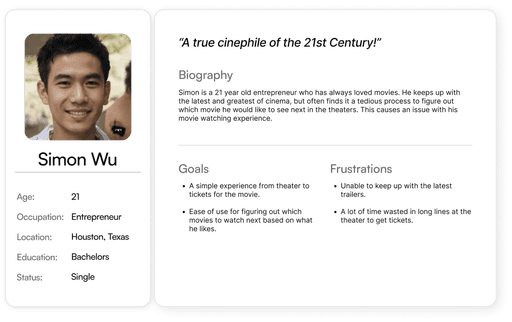
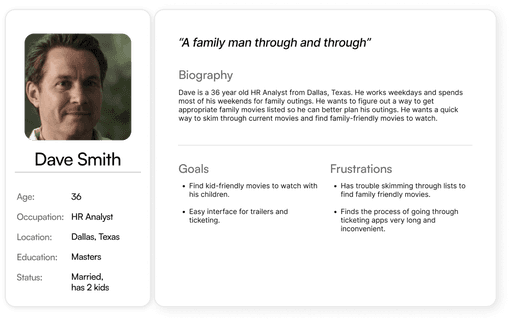
User personas
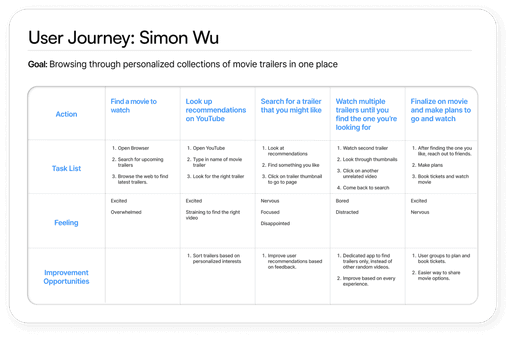
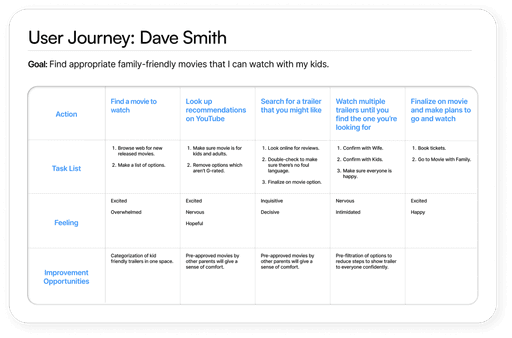
User journey maps
Analysis
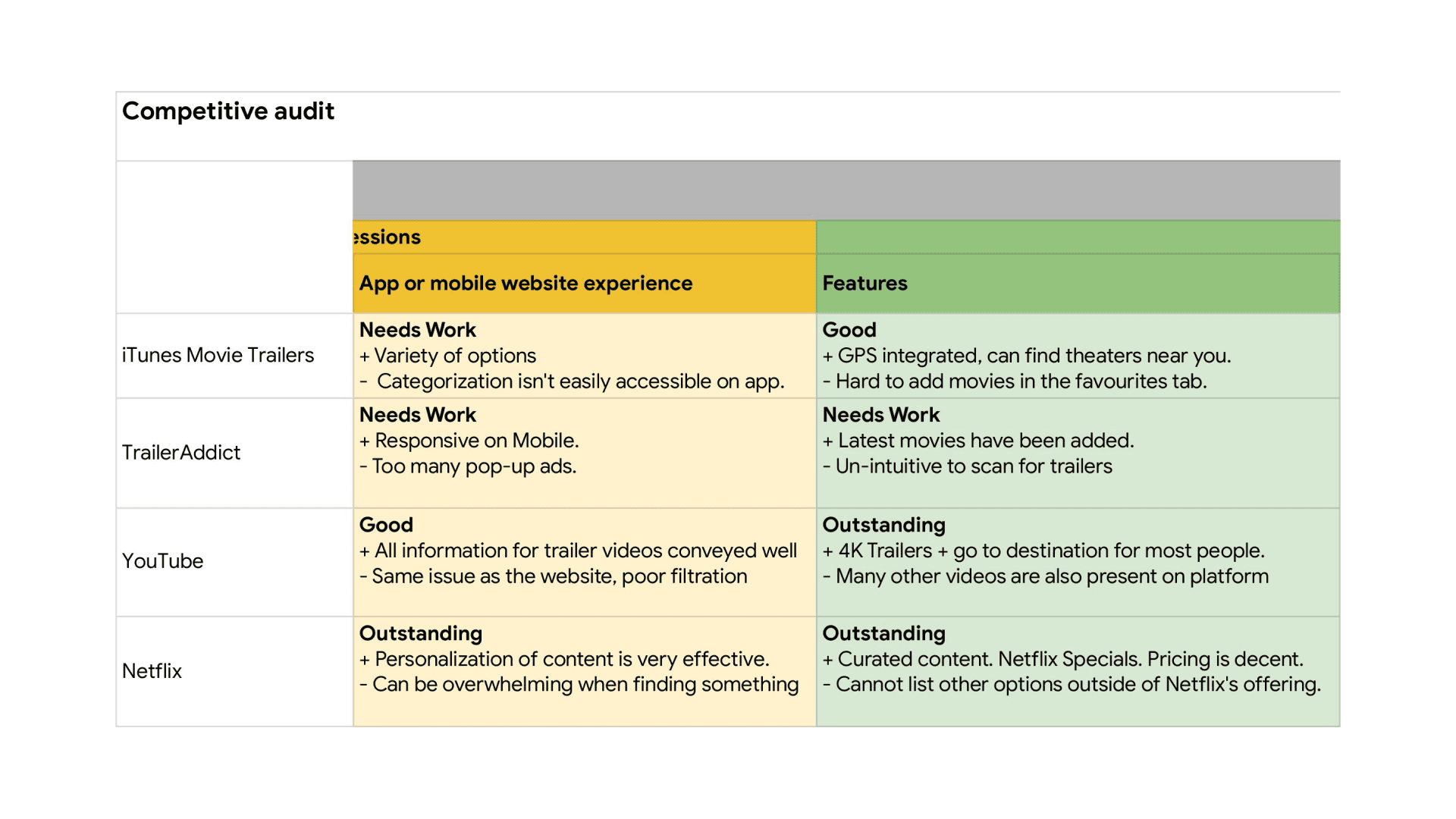
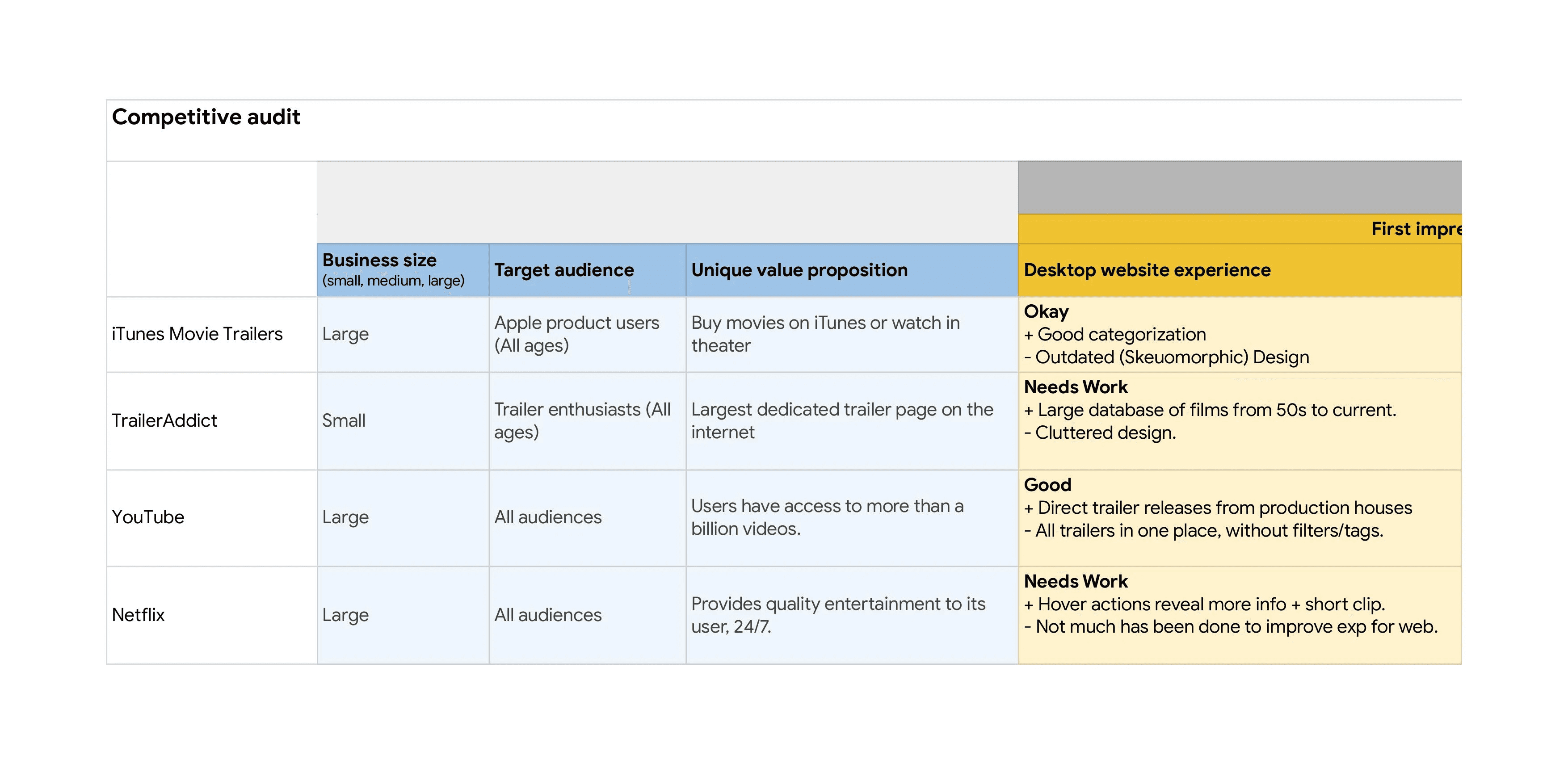
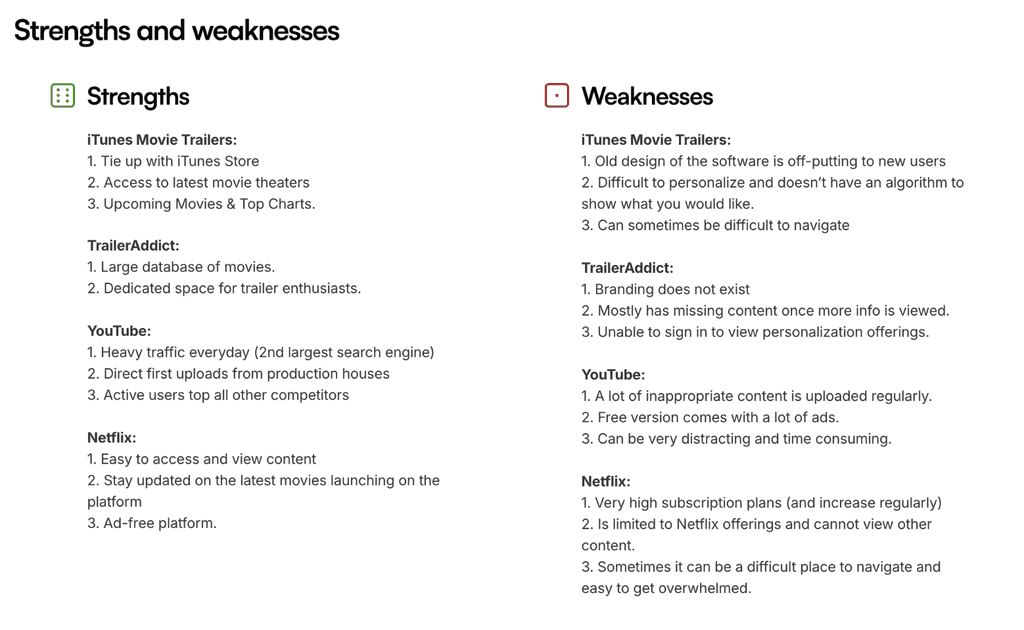
After completing the user research phase, I worked on the competitive audit, a SWOT analysis and identified gaps and opportunities.
Process
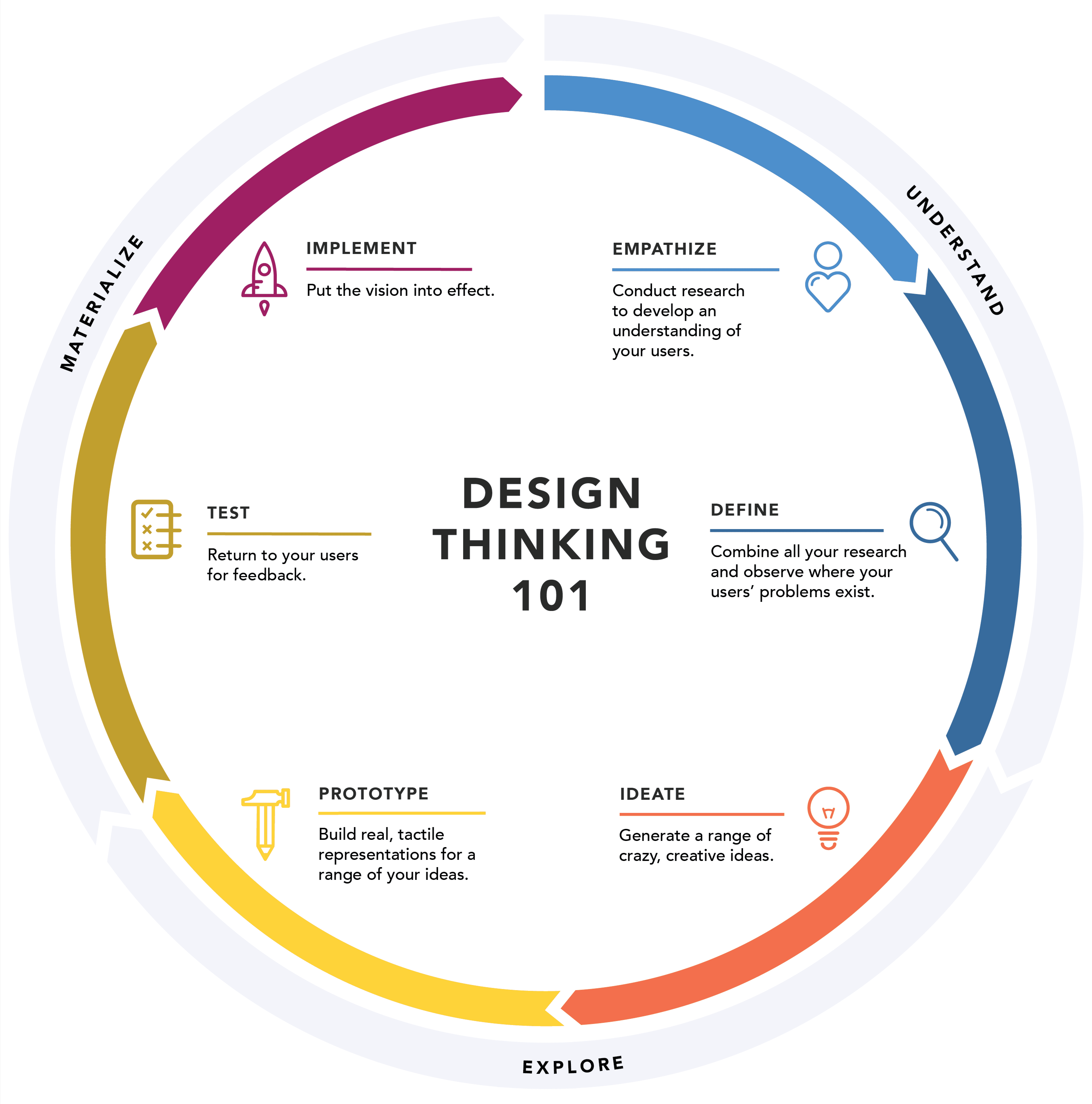
For the "Filmic" project, I followed the Design Thinking process.
I started by empathizing with potential users, identifying their needs for discovering and viewing movie trailers. Then, I defined the core problem based on user insights, ideated multiple solutions, and created prototypes to visualize different concepts. Through user testing, I gathered feedback and refined the design iteratively, ensuring the final product was user-focused and aligned with their preferences.
Ideation & user testing
Created different prototypes and conducted moderated user interviews to gather insights
Methodology:
Type:
Moderated remote usability study
Participants:
Five participants, between the ages of 24-54
Script:
Tasks followed by survey questions, measured by Likert scale (Strongly disagree - Strongly agree)
KPI's for evaluation:
drop-off rates;
conversion rates;
& system usability scale.
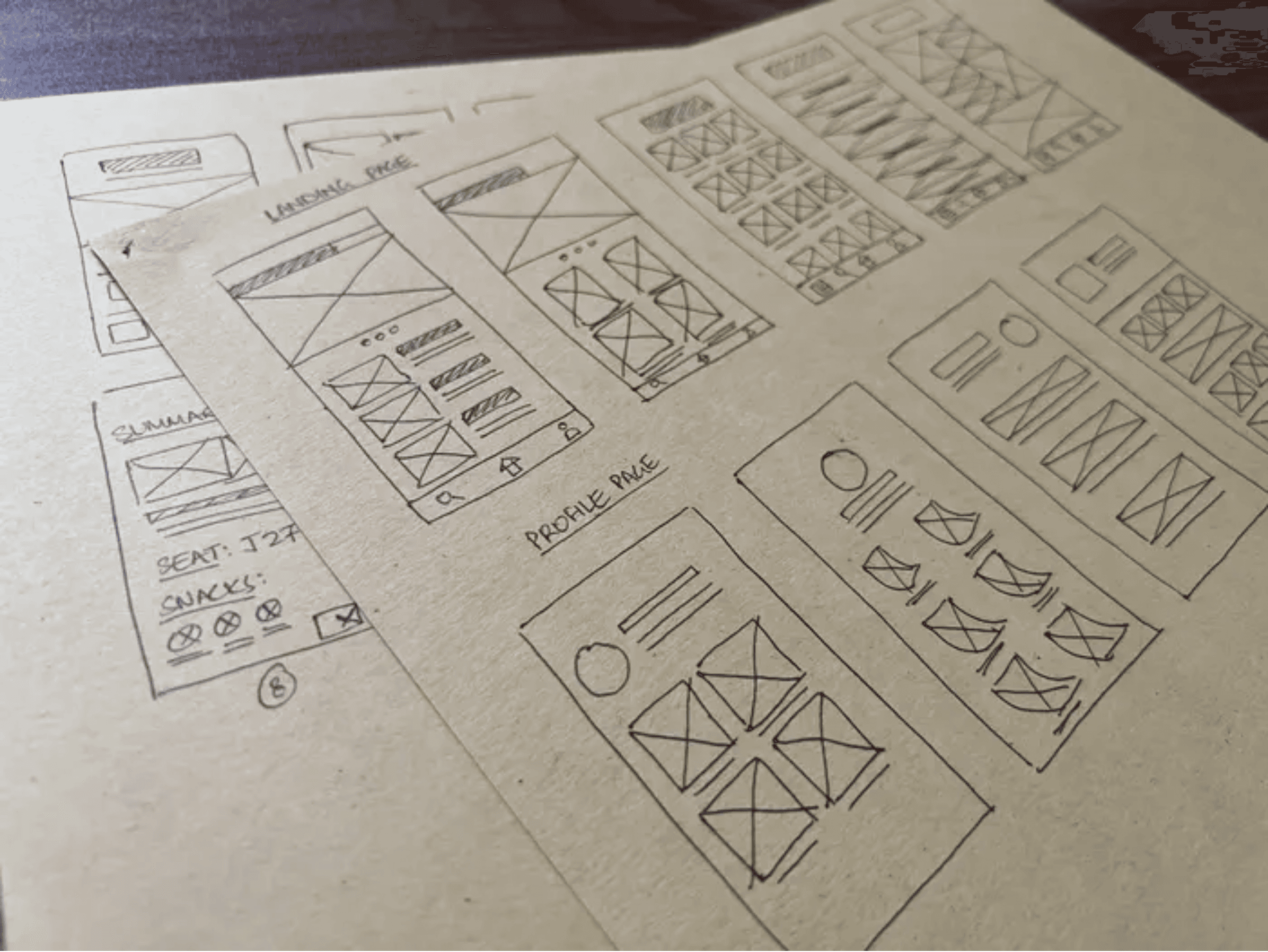
Initial sketching explorations
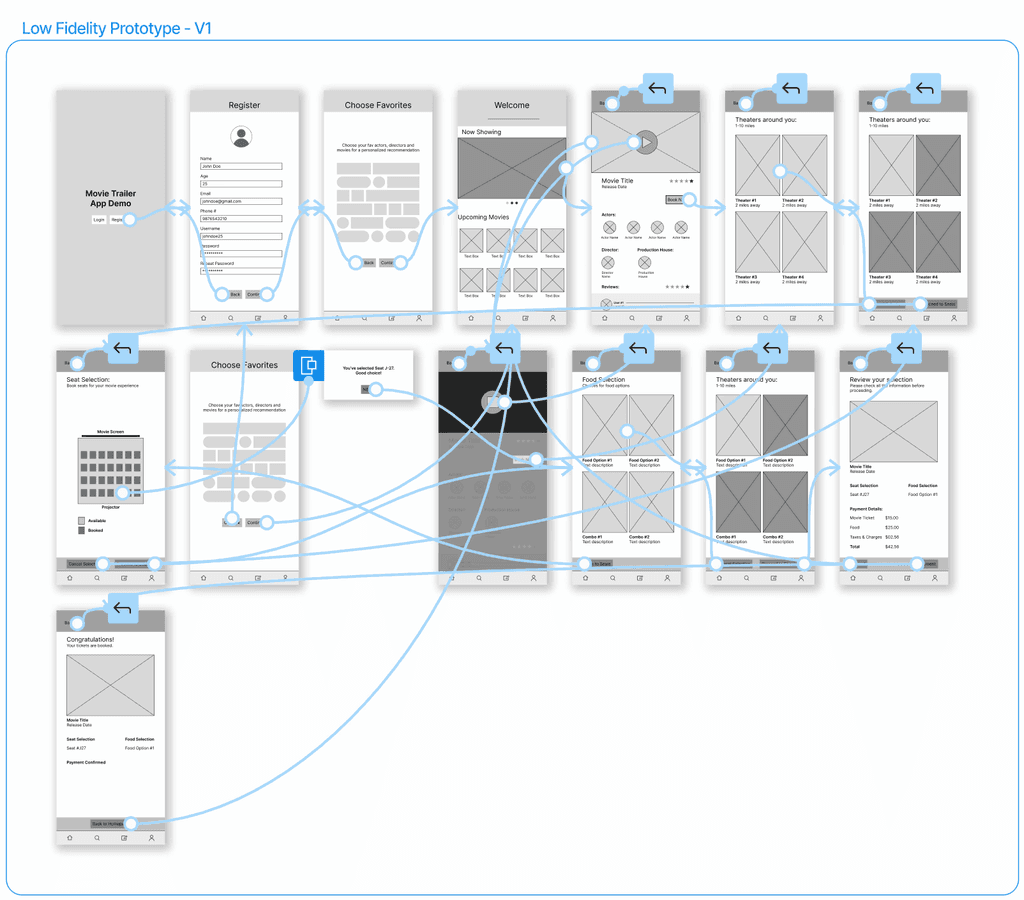
Low fidelity prototype -I
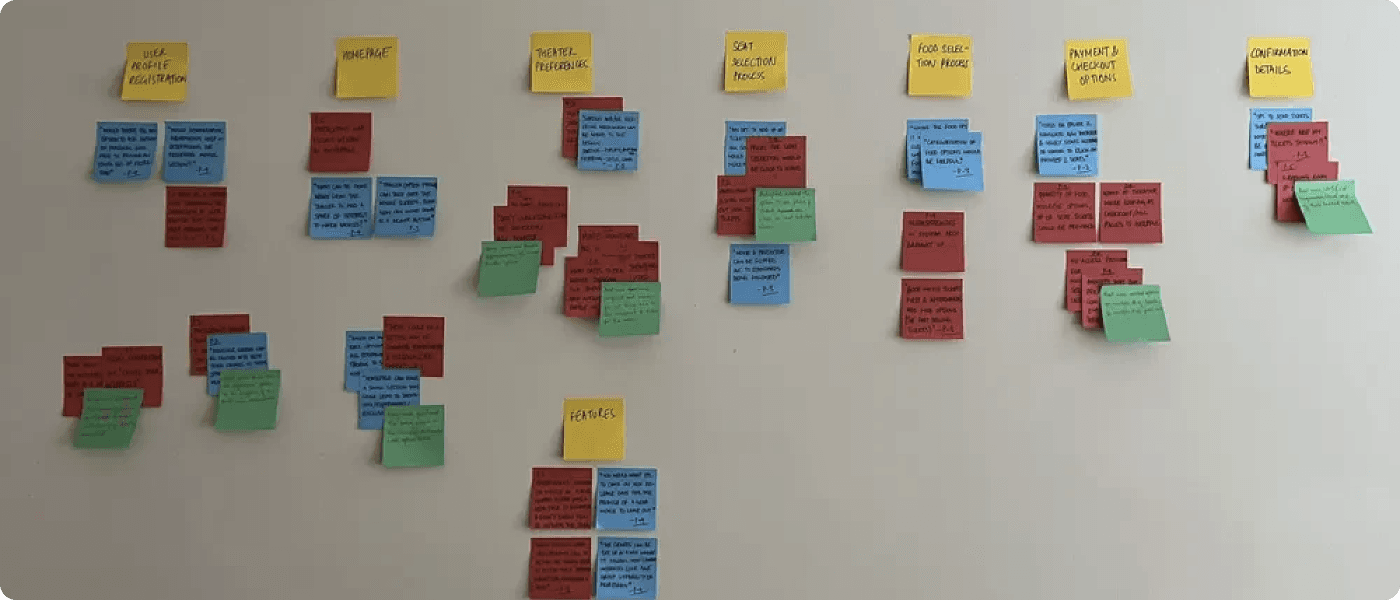
Affinity mapping
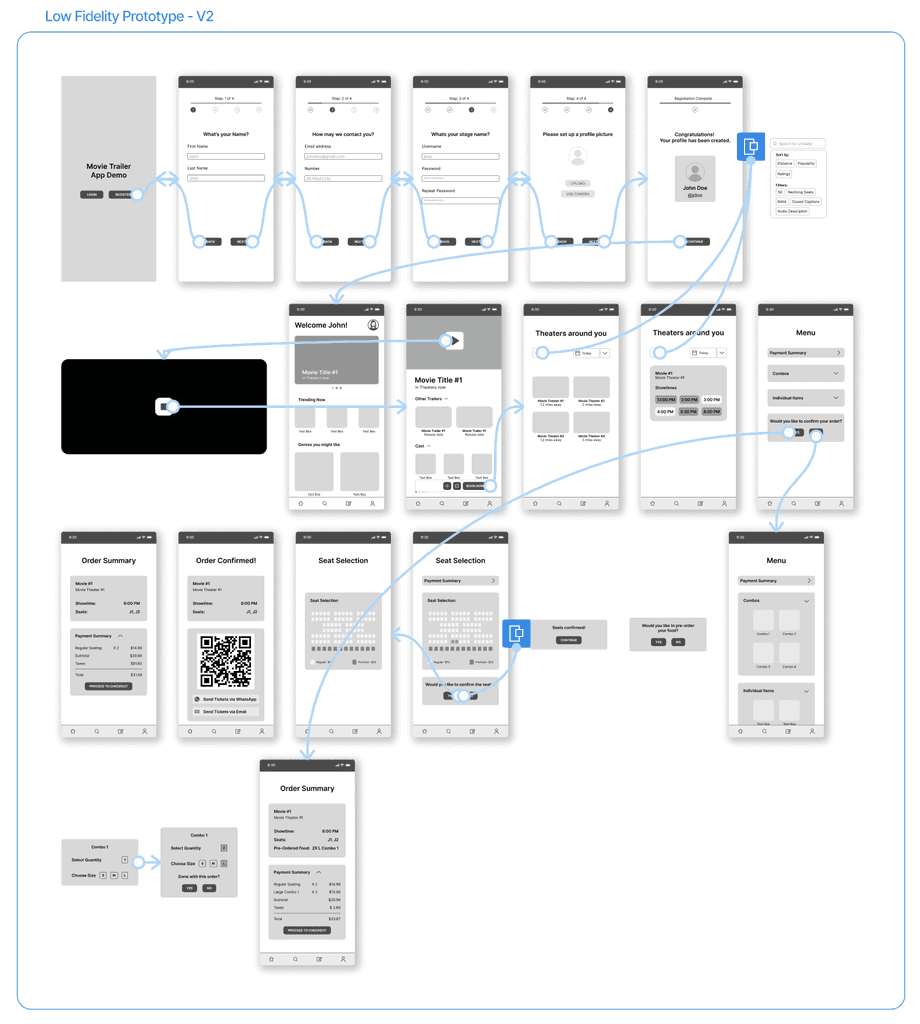
Low fidelity prototype -II
Low fidelity prototype -II
Some of the quantitative feedback gathered from the user testing was as follows:
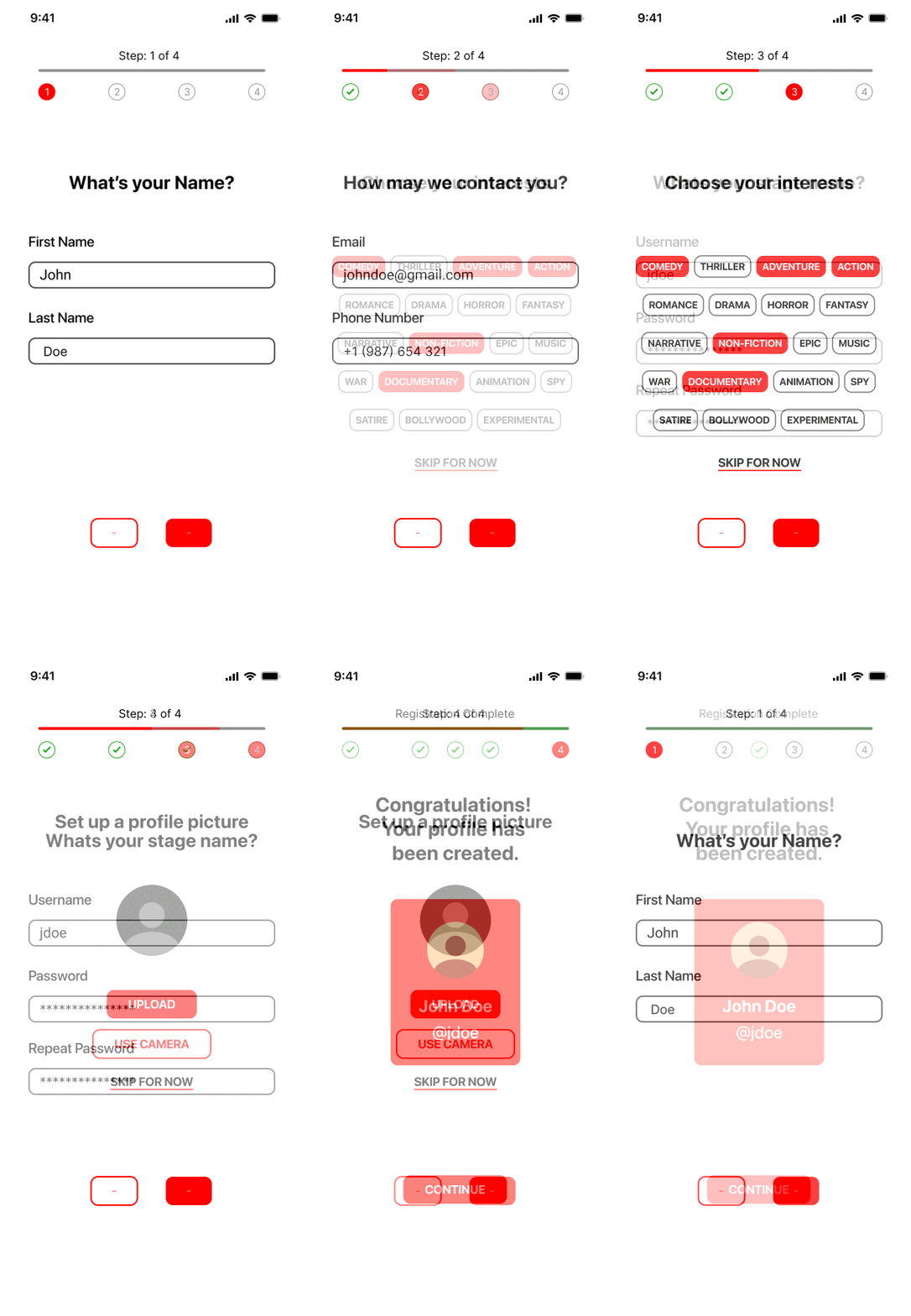
Registration was overwhelming
Users prefer smaller and easier steps for registration instead of all options being presented at once.
Enable external notifications
Users wanted an option to send an external notification and/or a more visual confirmation after tickets have been booked.
Lack of clarity regarding confirmation
Users had trouble understanding if their tickets were booked after going to the main homepage.
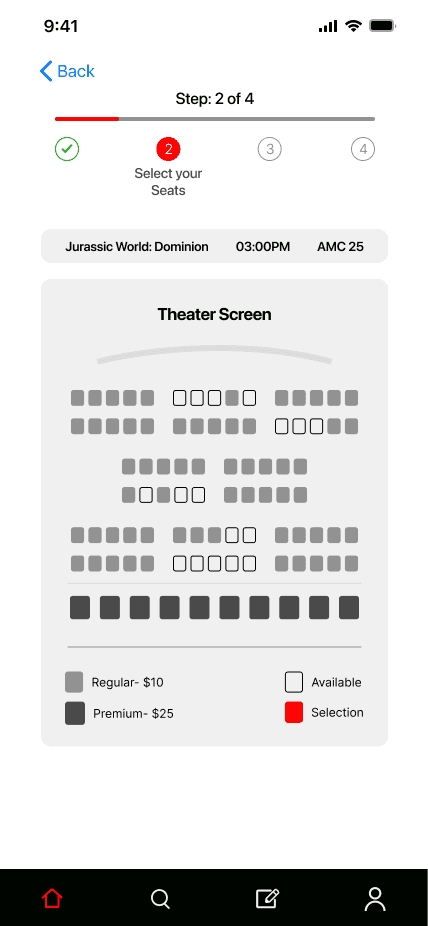
Booking detail visibility
85% of the user participants wanted the option to see the details of their booking at all times in the booking process.
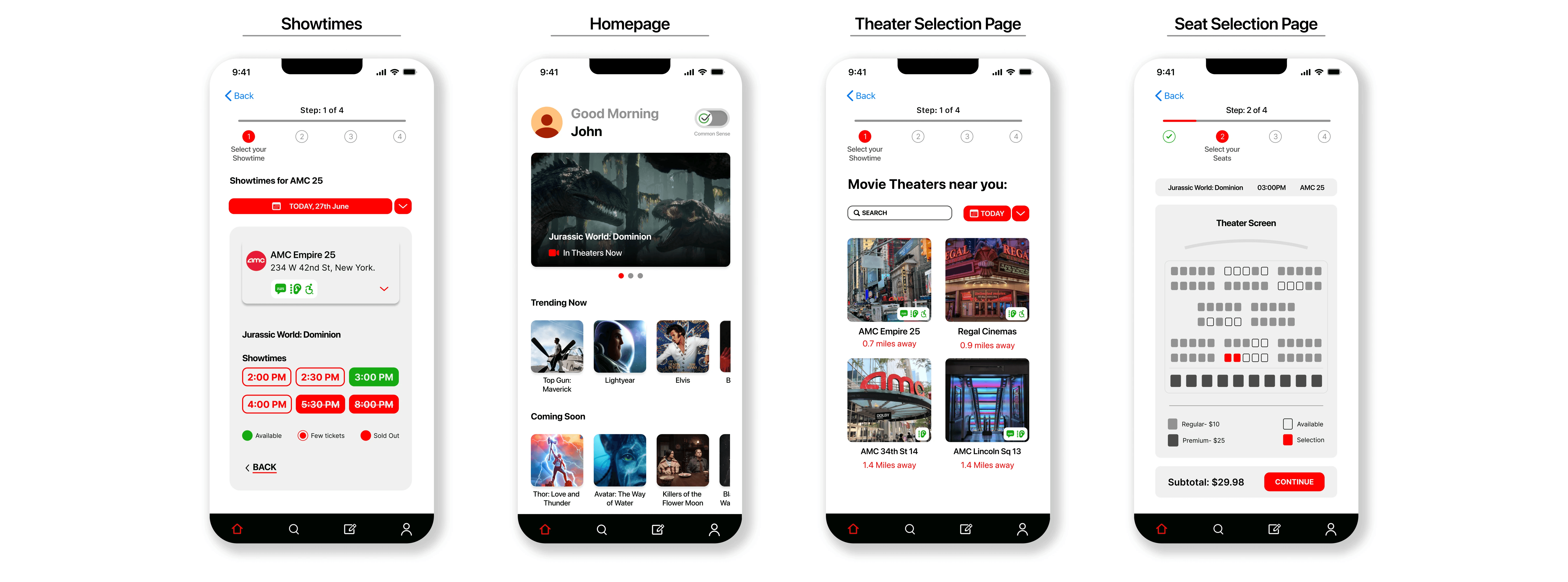
Final design
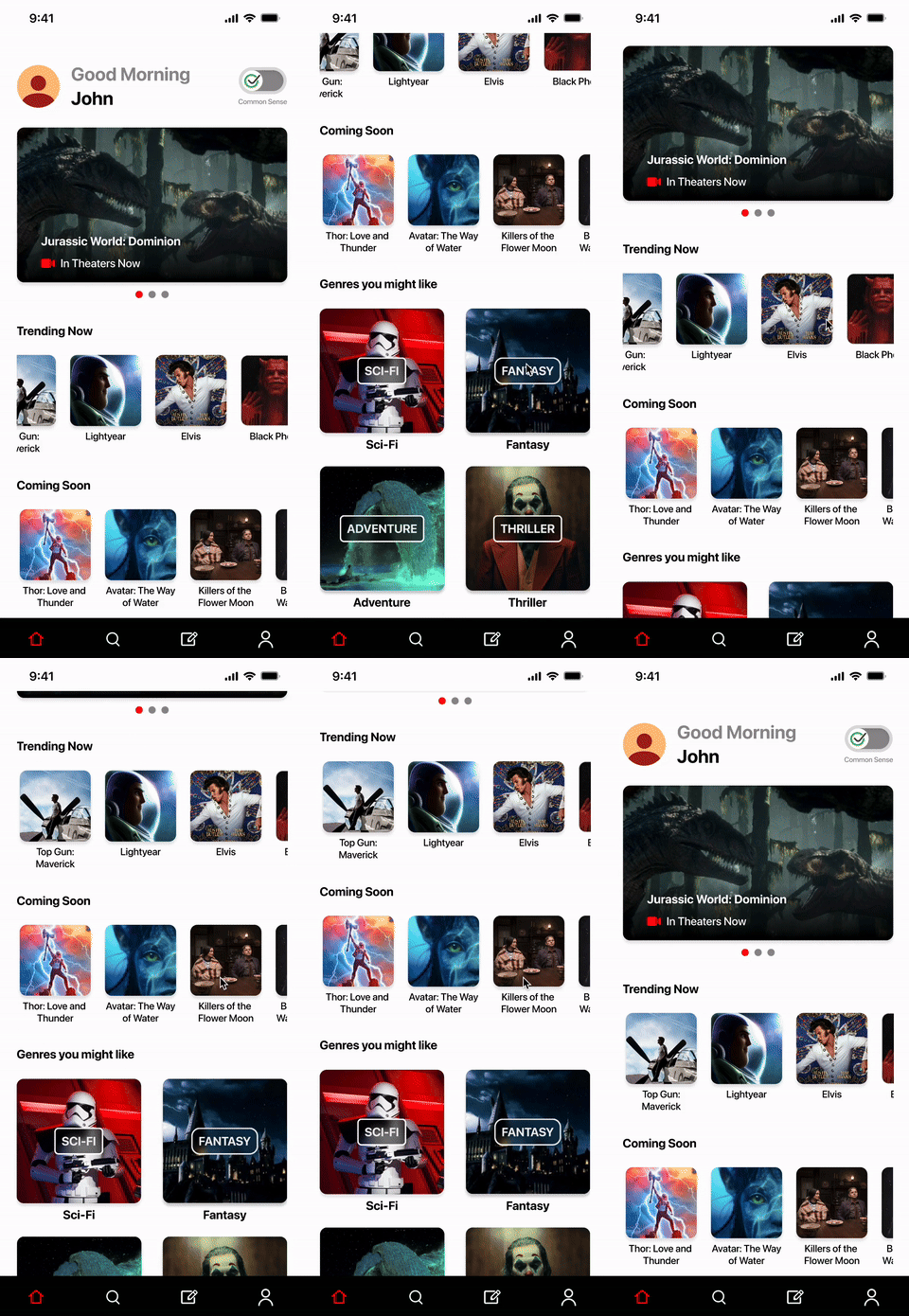
After creating the actionable insights from the second usability study, I started working on the high-fidelity mockups and prototyping what the flow of the app would be like.